Responsible Gambling
At Quatro Casino, we believe that gambling should remain an enjoyable form of entertainment rather than a source of financial, emotional, or personal hardship. As an independent gambling information and affiliate platform, our website provides educational content, casino reviews, bonus guides, and gaming insights for Canadian players while promoting responsible gambling practices at every stage of the player journey.
Canada’s gambling environment is regulated at the provincial level, and players have access to various tools and support services designed to encourage responsible gaming behaviour. We encourage our readers to make informed decisions, understand the risks associated with gambling activities, and seek assistance whenever gambling starts to negatively affect their wellbeing or finances.
This page explains practical gambling safety principles, outlines available support resources in Canada, and provides guidance for players and families who may be concerned about gambling-related harm.
Keeping Gambling as a Form of Entertainment
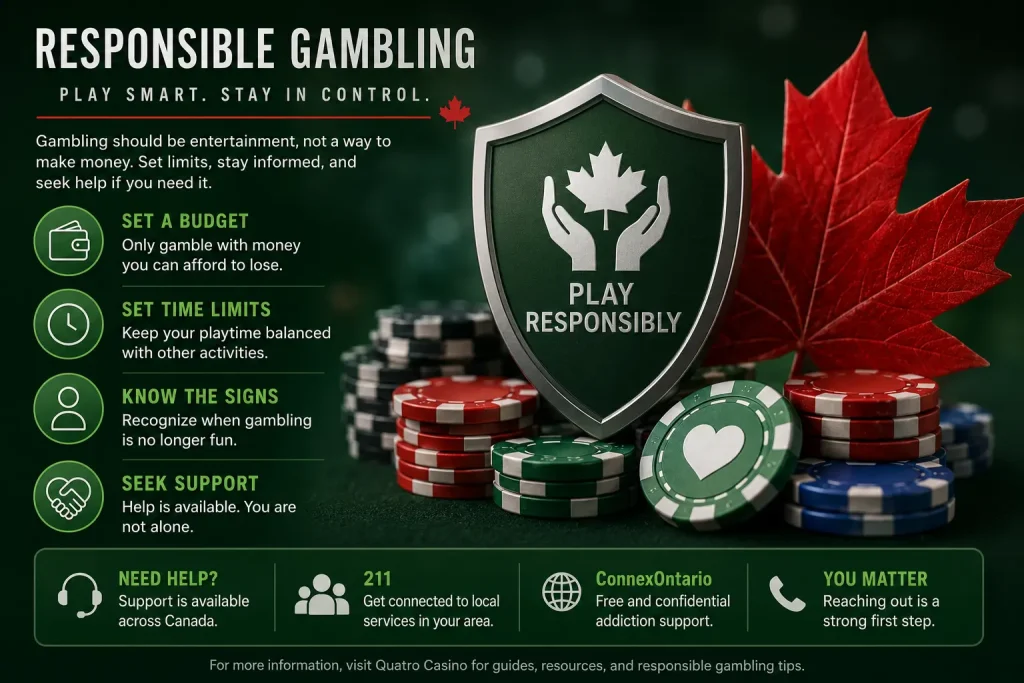
Responsible gambling begins with setting clear expectations before placing any bets. Gambling outcomes are based largely on chance, and no strategy, system, or betting pattern can guarantee consistent winnings. Players should only gamble using money they can comfortably afford to lose and should never view gambling as a way to solve financial problems.
Healthy gambling habits involve maintaining balance between gaming and other aspects of life. Taking regular breaks, participating in social activities, and preserving family, work, and personal commitments can help ensure that gambling remains a recreational activity rather than a daily necessity.
Our platform also recommends reviewing our FAQ section if you have questions regarding gambling terminology, bonus conditions, or responsible gaming information featured throughout the website.
Recognising Early Signs of Gambling-Related Harm
Problem gambling often develops gradually and may not be immediately obvious. A player may continue gambling despite increasing losses, spend more time thinking about betting activities, or feel anxious when unable to gamble.
Some common indicators that gambling may be becoming harmful include:
- Borrowing money to continue gambling.
- Hiding gambling activity from friends or family members.
- Neglecting work, studies, or personal responsibilities.
- Chasing losses by increasing stake sizes.
- Feeling stress, guilt, or irritability after gambling sessions.
The emotional and financial consequences of gambling addiction can extend beyond the individual player, affecting relationships, employment, and long-term financial stability. Recognising these signs early significantly improves the chances of preventing more serious harm.
Building Healthy Money Management Habits
Establishing financial boundaries is one of the most effective ways to support responsible gaming. Before participating in any gambling activity, players should decide how much money and time they are willing to spend and avoid exceeding these limits under any circumstances.
Practical budgeting techniques may include separating entertainment funds from essential expenses, using prepaid payment methods, and monitoring deposits regularly. Players should never use credit intended for rent, groceries, utility bills, or debt repayments.
| Responsible Practice | Purpose |
|---|---|
| Setting a weekly budget | Prevents excessive spending |
| Scheduling gambling sessions | Reduces impulsive play |
| Tracking deposits and withdrawals | Improves financial awareness |
| Taking cooling-off periods | Encourages better decision-making |
Additional information about how our website handles user information can be found in our Privacy Policy.
When Gambling Starts Affecting Emotional Wellbeing
Gambling-related stress can manifest through anxiety, mood changes, sleep disturbances, or feelings of isolation. Emotional difficulties sometimes encourage individuals to gamble more frequently as a temporary escape, creating a cycle that becomes increasingly difficult to manage.
If gambling begins affecting your mental health, speaking with a trusted family member, healthcare professional, or support organisation may provide valuable assistance. The Centre for Addiction and Mental Health (CAMH) offers information and resources related to addiction, mental health, and treatment services available throughout Canada.
Seeking support is a positive and proactive step rather than an indication of personal failure. Early intervention frequently leads to better long-term outcomes for individuals experiencing gambling-related difficulties.
Protecting Young People and Vulnerable Individuals
Gambling activities in Canada are restricted to adults who meet the legal age requirements established by their province or territory. Minors should never have access to gambling accounts, payment methods, or gaming devices used for wagering purposes.
Parents and guardians can reduce risks by taking several precautionary measures:
- Use device passwords and parental controls.
- Keep payment information secure.
- Discuss the risks associated with gambling and online betting.
- Monitor internet usage where appropriate.
- Install content filtering software when necessary.
Software such as BetBlocker may help individuals restrict access to gambling websites and applications across multiple devices.
Understanding Self-Exclusion and Spending Controls in Canada
Canadian players have access to several responsible gambling mechanisms that can temporarily or permanently limit gambling activity. Depending on the province and the operator involved, players may use deposit limits, cooling-off periods, account suspensions, or formal self-exclusion programs.
Players in Ontario may wish to explore the iGaming Ontario website for information about available player protection initiatives and responsible gaming tools applicable within the province’s regulated market.
Self-exclusion should be viewed as a practical safeguard rather than a punishment. Many players use these tools to regain control over their gambling behaviour and create an opportunity to reassess their relationship with betting activities.
Helping a Friend or Family Member
Gambling problems rarely affect only one person. Family members and close friends may experience financial pressure, emotional distress, or relationship difficulties when someone they care about develops harmful gambling habits.
If you are concerned about another person’s gambling behaviour, consider approaching the conversation calmly and without judgement. Encouraging professional support, setting healthy boundaries, and avoiding financial enablement can contribute to more positive outcomes.
The ConnexOntario service provides information about addiction, counselling, and community support options that may assist individuals and families seeking guidance.
Our Editorial Approach and Affiliate Disclosure
Quatro Casino is an independent gambling information website and may receive compensation through affiliate partnerships when readers visit third-party operators through links published on our platform. These commercial relationships do not influence our commitment to promoting responsible gambling practices or providing balanced information.
The content published on our website is intended solely for informational and educational purposes. We do not operate gambling services, accept wagers, or provide gambling accounts. Readers should always verify the legality and suitability of any gambling activity within their province before participating.
Additional information regarding our website policies and user responsibilities is available on our Terms & Conditions page and within the information published on our About Us section.
Frequently Asked Questions
How do I know if my gambling habits are becoming unhealthy?
Frequent thoughts about gambling, spending more money than planned, borrowing funds to continue playing, or feeling distressed after gambling sessions may indicate problematic behaviour.
Can I stop gambling temporarily without closing all of my accounts?
Many regulated operators offer cooling-off periods, deposit limits, and temporary suspensions that allow players to take breaks from gambling activities.
Are responsible gambling tools available throughout Canada?
Yes. Availability may differ between provinces and operators, but Canadian players generally have access to self-exclusion programs, spending controls, and support services.
Should family members seek help if another person’s gambling affects them?
Absolutely. Gambling-related harm often impacts relatives and friends, and support organisations can provide counselling, information, and practical advice.
Can I contact your team about responsible gambling information?
If you have questions regarding responsible gambling content published on our platform, require clarification about our editorial policies, or wish to report concerns relating to responsible gaming information, you may contact our team at [email protected] or visit our Contact Page. We will do our best to direct you toward appropriate information and support resources.